










Skip to content
Related Blogs
How to Choose a Safe Hair Transplant Clinic in Australia

Hair restoration is becoming more common in Australia, but not all providers meet the same medical standards. In this article, Dr Anwar from Gro Clinics Sydney explains the key red flags to look for when choosing a hair transplant clinic—so you can make a safe, informed decision.

Your Hair Transplant Timeline: What to Expect Before, During and...

Considering hair restoration? In this edition of Hair Loss 101, we walk you through what to expect before, during, and after a procedure at Gro Clinics, using our refined approach to follicular unit extraction (FUE) with a focus on precision and comfort.

Related Blogs
How Hair Grows: Anagen, Catagen, Telogen & Exogen Hair Phases

Ever wondered what’s really happening on your scalp? Hair doesn’t just grow—it cycles. In this edition of Hair Loss 101, we break down the science behind the four distinct stages of hair growth and why understanding them is essential to managing hair thinning or loss.

6 Common Causes of Hair Loss

The Norwood Scale, also known as the Norwood-Hamilton Scale, is the standard classification system for male pattern hair loss. Whether you're just starting to notice thinning or exploring hair restoration options, understanding the scale is a helpful first step. Here's everything you need to know.

Related Blogs
Best Foods to Support Healthy Hair Growth

A balanced diet plays a critical role in maintaining overall health—including the health of your hair and scalp. Nutritional deficiencies can impact the normal hair growth cycle, contributing to ex...

How Often Should You Really Wash Your Hair?

One, two, three, one, two, three, wash. How often should we really be washing our hair? Between how sensitive hair can be, and how easy it is to under-or overdo washing, we decided to deep dive int...

Related Blogs
10 Years of Hair Transplants in Australia: Gro Clinics’ Journey

In 2014, Gro Clinics opened its first hair transplant clinic in Sydney, aiming to change how Australians approach hair restoration. With one doctor and one nurse, our mission was clear: deliver ethical, medically guided care for hair loss. Today, that mission continues - across a national network of doctor-led clinics in Australia and New Zealand.

What We've Learned Over The Decade.

Over the past decade, Gro Clinics has grown from a single clinic to a network with locations in Sydney, Melbourne, Brisbane, Perth, the Gold Coast, and Auckland. Each clinic offers in-person consultations and assessments, providing personalised recommendations based on each client’s goals and medical needs.

0

Your cart is empty

Continue shopping
Back to all blogs

4 Clinical Reasons Why a Hairline May Appear Uneven

4 Clinical Reasons Why a Hairline May Appear Uneven

Jump To

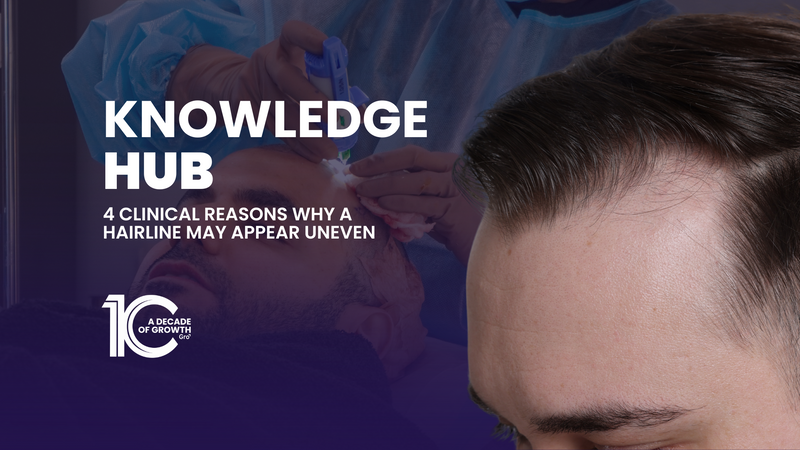
A hairline that appears uneven is a common concern and may be caused by several factors—some entirely natural, others linked to external stressors or patterned hair loss. While it's often harmless, an uneven hairline can also be an early indicator of hair thinning or follicular miniaturisation. Below, we explore four evidence-based reasons for uneven hairlines and what you can do if you're seeking to improve your hairline's appearance.

1. Genetic Hairline Asymmetry

Hairline shape and density can be inherited traits. Some people naturally develop hairlines that sit higher or recede more on one side than the other. This form of asymmetry is typically stable over time and doesn’t always indicate progressive hair loss. If you're unsure whether your hairline is changing or naturally uneven, speaking to a Hair Growth Advisor can provide clarity.

2. Maturing Hairline

In many individuals, the hairline changes during adolescence or early adulthood—a process known as maturation. This involves the hairline moving slightly higher and becoming more defined. It can occasionally become uneven, but this is a normal part of the ageing process and not necessarily associated with clinical hair loss.

3. Traction Alopecia

Traction alopecia is a form of hair loss caused by consistent tension on the scalp. Hairstyles that exert continuous pulling force—such as tight ponytails, braids, or cornrows—may place strain on the hairline and temples. Early intervention, such as loosening hairstyles and reducing mechanical stress, can help prevent progression. If you suspect traction alopecia, consult a professional for personalised advice.

4. Androgenic Alopecia (Pattern Hair Loss)

One of the most common causes of uneven hairlines in men is androgenic alopecia, also known as male pattern hair loss. This condition often begins with recession at the temples and frontal zones, which can result in asymmetrical thinning. Over time, the hairline may recede in a pattern that becomes more noticeable. If appropriate, you may explore treatment options that include prescription hair care or doctor-led procedures.

Can You Restore an Uneven Hairline?

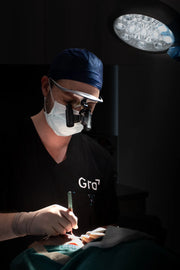
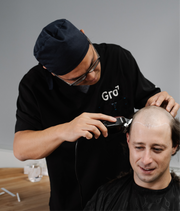
In some cases, an uneven hairline may be restored or redesigned through treatment options such as Gro’s Precise Follicle Placement (PFP) approach to hair transplantation. This technique involves the direct implantation of healthy hair follicles, one by one, into the desired areas with minimal handling. Every procedure is performed by, or under the supervision of, a registered doctor. Outcomes vary and depend on clinical suitability and goals discussed during a consultation.

What to Expect During a Consultation

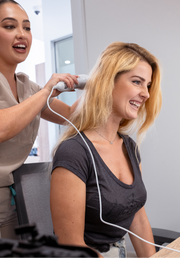
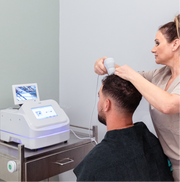
Gro offers personalised consultations with a Hair Growth Advisors who assess hairline characteristics and recommend suitable pathways. Depending on your goals and hairline status, options may include non-invasive treatments, lifestyle recommendations, or procedural solutions. All treatment plans are customised to your individual needs.

Gro Clinics Locations

To explore options or get guidance, book a consultation or ask a question today.


Ready to book a consult?

BOOK A CONSULTATION

Ready to explore your options?

If you're considering hair restoration, you can book a 15-minute phone call with a trained Gro Clinics consultant.

We'll walk you through the process, answer general questions, and explain next steps if you're interested in an in-clinic assessment. This call is for general information only and not a medical consultation.

Prefer a phone call?

CALL US INSTEAD

Prefer a phone call?

CALL US INSTEAD