












Key Takeaways
Castor oil is a commonly adopted approach for hair loss and thinning hair, typically used to moisturise the scalp and reduce breakage. While no clinical trials have proven the effectiveness of castor oil, some people have found it anecdotally useful for hair care.
The following article will go through the potential benefits of castor oil for hair and how to apply it safely and effectively.
Note that this information is general in nature and does not constitute medical advice. Individual results may vary.
What is Castor Oil?
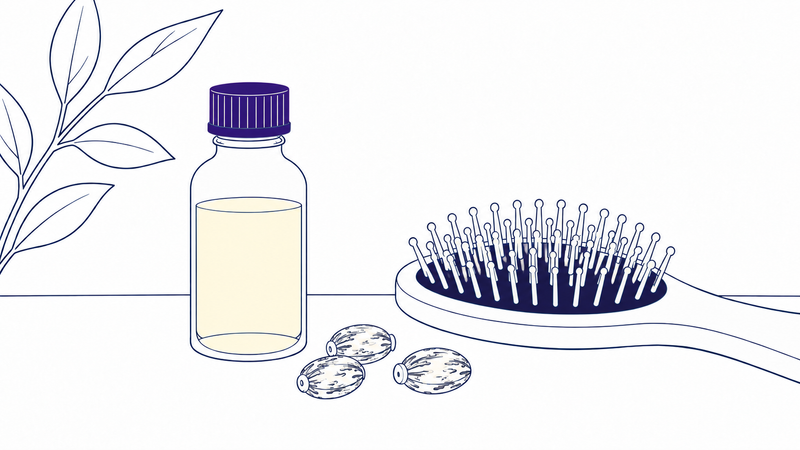
Castor oil is a type of vegetable oil that is extracted from the seeds of the Ricinus communis plant, also known as the castor bean. It is a thick, pale-yellow liquid rich in ricinoleic acid, which makes it most commonly used as a laxative.
This acid also gives castor oil moisturising and anti-inflammatory qualities, which are sometimes used in skin care, hair care, and lubrication.
Does Castor Oil Regrow Lost Hair?
There is no published scientific evidence that castor oil may help regrow lost hair, contribute to hair restoration, or help reduce hair loss. A study found that 'There is weaker evidence for castor oil improving hair quality by increasing hair luster, and no strong evidence supporting its use for hair growth or treatment of infestation.'
For treatments designed to improve hair density and coverage, book a free 15-minute discovery call with a hair growth advisor.
Side Effects and Precautions
Castor oil is a thick, sticky substance that may cause varying reactions from person to person. Potential side effects of using castor oil for hair may include:
- Allergies: Some people may have an allergic reaction to castor oil. It is recommended to contact a registered health practitioner to check whether castor oil is suitable for your individual circumstances.
- Scalp irritation: Some people may develop a rash or show signs of itching, burning and redness when they apply castor oil to their scalp.
- Clogged pores and buildup: The thickness of castor oil may cause an increased build-up on the scalp and hair, which may trap dirt, dead skin and other substances. This may also worsen dandruff, folliculitis or make hair look more greasy and flat.
- Dryness: When castor oil is left on for too long, it may dehydrate certain hair types or contribute to a more tangled, 'felted' appearance.
- Eye irritation: If you accidentally put castor oil in or near your eyes, it may cause burning, redness or other discomfort.
- Hair Felting: According to a 2017 study, castor oil may also contribute to hair felting, a condition where the hair tangles, twists and compacts into a dense, hard and irreversible mass.
If you experience any adverse reactions, consider seeking medical advice immediately.
How Castor Oil May Improve Hair Health
Castor oil is rich in several minerals and nutrients that may potentially assist in some factors of hair health. Potential benefits include:
1. Moisturised Hair
A 2022 study found that castor oil may contain ricinoleic acid. It may work as a natural moisturiser, which may also seal in your hair's natural oils. The acids may also nourish your hair follicles, boost its shine and help reduce breakages and split ends.
2. Antioxidants
The castor oil plant may contain antioxidants, according to a 2022 study. These may help combat free radicals. This may reduce inflammation tied to oxidative stress.
3. Anti-inflammatory
As the ricinoleic acid found in castor oil may inhibit inflammatory pathways, the oil may have a mild anti-inflammatory effect, according to a study from 2000. This may help reduce, but not treat, inflammation.
How to Apply Castor Oil
Whilst Gro Clinics may not recommend castor oil as a treatment to improve hair growth or density, some individuals may still choose to include it in their haircare routine. If so, it's important to use it safely and appropriately.
Only apply castor oil 1–2 times per week. Follow these steps to apply castor oil to your hair:
- Clothing: To reduce staining your current clothes from spreading oil, wear an old t-shirt or other items you don't mind getting dirty.
- Hair prep: Section off your hair into the parts you intend to apply oil to. This will make it easier to massage it into the follicles. You may also want to consider putting on rubber gloves to make it easier to clean up, and to massage the oil into your scalp.
- Apply the oil: Apply the castor oil into each section of your hair by massaging it into your scalp. You may use a comb to ensure even coverage. It should not be soaked through with oil, only enough to make your hair moist.
- Shower: Put on a shower cap and ensure all your hair is inside it. Then, clean off any oil from your hands, shoulders, and body. Be sure to wash your face of any oil as well.
- Wait two hours: Leave your shower cap on for two hours. This may give the oil enough time to settle on your scalp and hair.
- Wash your hair: Once the two hours have passed, you may wash your hair with shampoo and conditioner.
If you experience any side effects, remove the castor oil immediately and seek medical advice.
Applying Castor Oil on Brows and Lashes
Be extremely cautious when applying castor oil to your eyebrows or eyelashes. A clean eyelash brush, mascara wand or clean Q-tip may be able to make the application easier. Once you have found a wand, you may apply castor oil by:
- Wash your face gently and pat it dry.
- Pour a small amount of castor oil into a small container, like a cup or a bowl. The amount of oil you will need depends on the thickness of your eyebrows.
- Dip your brush, Q-tip or wand into the oil and let the excess drip back into the bowl.
- Lightly rub the brush over each eyebrow to coat the hair. Make sure the oil does not drip down into your eyes.
- Depending on your preferences, you may keep the oil on for a few hours or leave it on overnight.
- When you are ready to remove it, simply wash your face as usual.
If you experience any side effects, remove the castor oil immediately and seek medical advice.
Hair Growth at Gro Clinics
At Gro Clinics, our hair restoration approach is performed by registered health practitioners. We take a supported approach to hair restoration designed for natural-looking results and a gradual improvement over time.
Our hair transplant procedures are performed by AHPRA-registered doctors and are designed for long-term results. Individual results may vary. A consultation is required to determine suitability. Our services include:
- Hair transplant procedures
- Growth factor therapy
- Low-level light therapy (LED)
- Prescription haircare treatments*
*Prescription haircare treatments are available following a consultation with a doctor to assess suitability.
Castor Oil for Hair Loss FAQs
Is there clinical evidence that castor oil regrows hair?
No, there is currently no clinical or scientific evidence that castor oil can regrow hair or generally improve hair health.
Can you put castor oil in your hair every day?
No, daily use of castor oil is not recommended, as overuse may lead to sticky hair, buildup, greasiness, and potentially matting over time. It may be more effective only to apply castor oil 1–2 times per week.
Which is better for your hair, rosemary oil or castor oil?
Neither rosemary nor castor oil is 'better' for your hair than the other, as each substance may contain different benefits for your hair.
Rosemary oil may help improve scalp health when applied, while castor oil may be more appropriate to support hair moisture.
Can castor oil clog hair follicles?
Yes, when used in excess, especially on oily or fine hair types, castor oil may increase the risk of clogging hair follicles. Remember to wash out castor oil two hours after applying it to reduce accumulation, product buildup, and more.
Can I leave castor oil in my hair for 2 hours?
Yes, you may leave castor oil in your hair for 1–2 hours. In fact, this is the recommended time to apply castor oil, as any longer may risk clogging hair follicles.
Does castor oil work for hair loss?
No, there is no evidence that castor oil may help reduce or assist in hair loss and hair regrowth. As a hair solution, it is more applicable for potentially supporting moisture and anti-inflammatory properties.
Does castor oil go bad?
Yes, castor oil typically has an expiry date of 1–2 years, or 6–12 months after it is opened. While castor oil does not spoil like food, it does become rancid through oxidation, and will not be safe to apply to your hair any longer.