








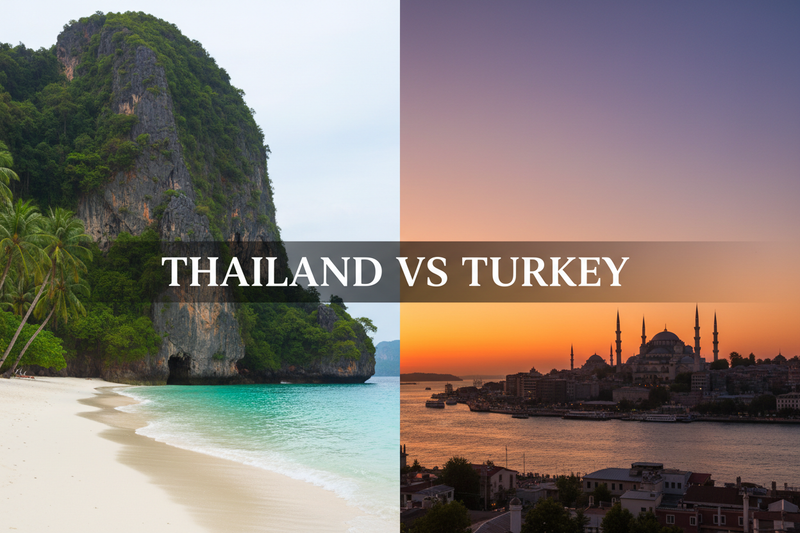
For many years, Australians experiencing hair loss have gone overseas to Thailand and Turkey for hair transplant surgery. Medical tourism packages and the perception that travelling abroad was the only practical option for accessing advanced hair transplant procedures have driven this trend.
In this post, we will compare hair transplants in Thailand and Turkey by examining key differences in their costs, techniques, and care standards. We'll also highlight why, for many patients, there is no longer a need to travel overseas.
Clinics like Gro Clinics are now offering trustworthy, accessible, and cost-effective hair restoration options right here in Australia. They allow you to recover more comfortably at home without the added time, expense, and disruption of international travel.
Hair Transplant Thailand vs Turkey: What’s the Difference?
Thailand and Turkey are regarded as leading destinations for hair transplantation. Both offer affordable treatment packages for overseas visitors, administered by expert medical teams using advanced technology.
However, the way hair transplant procedures are delivered, structured, and supported can differ. Here's an overview of how.
Cost
Cost is one of the main reasons countries like Thailand and Turkey have attracted so many Australians for hair transplants. Typically, treatment packages are advertised for between $2000 and $7000. Some practitioners even offer "all-inclusive packages" that bundle different procedures.
However, these often do not include flights, hotels, airport transfers, visas, travel insurance and food. So, the real cost of committing to a Thailand or Turkey hair transplant can be much higher.
For Australian patients, it’s important to consider factors such as time off work, days spent recovering overseas, and potential follow-up care once back home. When factored into the equation, the total financial and personal commitment of travelling overseas for a hair transplant might not be as feasible as you first thought.
Extraction Methods
Most hair transplant procedures performed in Thailand and Turkey use follicular unit extraction (FUE). This is a technique in which individual hair follicles are carefully harvested from a donor area and implanted into thinning areas.
Some clinics also offer direct hair implantation (DHI). This places follicles directly into the scalp using specialised equipment. Both methods are considered advanced hair transplant techniques. They are performed by experienced hair transplant surgeons and designed to minimise visible scarring.
Surgeon Experiences
Thailand and Turkey have well-established hair transplant industries with clinics that offer cosmetic procedures. Some even administer hair restoration surgery.
In Turkey, many clinics operate at scale. This means healthcare professionals have gained experience through frequent procedures. Although smaller, Thailand’s industry is often linked to wider cosmetic and medical care.
It is important to note that the experience levels of skilled surgeons and the level of clinical oversight can vary between clinics in both countries. That is why it is vital to conduct thorough research into their standards and the practitioner's credentials.
Success Rates
Hair transplant procedures generally have a high success rate. Some sources quote it at 98%. However, success can vary depending on several factors. This includes:
-
Quality of donor hair
-
Method used
-
Adherence to post-procedure care
-
Complications such as infection, scarring, or graft failure (which are possible with any procedure).
Thai clinics and Turkish clinics will naturally report favourable outcomes. But it is essential to understand the variables and risks before choosing a treatment destination.
Safety Measures
Both Thailand and Turkey have established healthcare systems with regulatory bodies that oversee medical facilities. Most clinics that cater to international patients follow standard pre-procedure assessments and sterile operating practices.
That said, the level of oversight, accreditation and enforcement can vary between providers. Moreover, not all clinics are subject to the same quality standards. For this reason, travellers to both should make sure that any clinic they consider is properly accredited and has clear safety protocols.
Key Considerations When Travelling Overseas for a Hair Transplant
Travelling overseas for a hair transplant involves much more planning and responsibility than receiving treatment in Australia. Some of the things patients need to consider include visas, the climate, time off work, and how post-procedure care will be handled upon their return to Australia. Here is how you might be affected in Thailand vs Turkey.
Thailand
Australians can enter Thailand for short-term stays without a medical visa. However, they will need to factor in travel time before and after the procedure, as well as the potential effects of the country's heat and humidity during your early recovery period.
Turkey
Flying to Turkey takes longer than flying to Thailand, as it usually requires a stopover. It also may involve arranging visas. Again, the effect of the climate and heat on your recovery should also be considered.
Why Do Australians Seek Out Overseas Hair Transplants?
Since around the 2010s, many Australians experiencing hair thinning or hair loss have travelled overseas to countries like Turkey and Thailand for hair transplant procedures.
Some of the main reasons for doing so included:
-
Perceived lower cost of treatment
-
Easier access to high-volume hair transplant clinics
-
The rise of attractive all-inclusive medical tourism packages
-
Limited awareness of Australian hair restoration options
Today, many of these factors are less relevant because Australia’s hair transplant industry has matured. There are now several clinics here, including Gro Clinics, that perform hair transplants or other cosmetic surgery procedures using advanced techniques.
Benefits of Getting a Local Hair Transplant in Australia
There are some compelling advantages to completing your hair transplant journey in Australia. They include:
-
Avoiding international travel costs
-
Taking less time off work
-
Personalized care and products for diverse hair types
-
Recovering comfortably at home
Additionally, in Australia, treatments are performed by experienced surgeons who must comply with regulatory standards. You'll also get clear communication from healthcare professionals, and follow-up appointments will be much easier to keep.
Book a Tailored Hair Growth Plan with Gro Clinics
Deciding where to have a hair transplant is entirely up to you. But while Thailand and Turkey remain popular destinations, many Australians now find that staying local is a more appealing option.
Gro Clinics provides personalised hair restoration plans delivered by experienced healthcare professionals. To find out more about our Precise Follicle Placement (PFP) method and understand if it's right for you, book an initial consultation today.
Frequently Asked Questions
Which country is best for hair transplants?
There is no single country that is best for hair transplants. Where you choose should be based on your individual needs, expectations, and what access you have to follow-up care.
It is important to recognise that outcomes will vary depending on the practitioner's experience, the clinic's standards, and the post-procedure support offered. It is worth basing your decision around those factors.
Is Turkey or Australia better for a hair transplant?
Both Turkey and Australia are well known for offering hair transplantation procedures at accredited clinics. Turkey offers medical tourism packages that might be cheaper. But if hair transplant safety is more important to you, then Australia might be the go.
What are the negatives of a hair transplant in Turkey?
Some of the potential drawbacks of hair transplant surgery or procedures in Turkey include:
-
Long travel times
-
Extended recovery overseas
-
Potential language barriers
-
Standards and practitioner oversight can vary between clinics
-
How post-procedure concerns would be managed from Australia