










Key Takeaways
Hair loss and male pattern baldness are completely natural processes that affect millions around the world. Norwood 2 is an early stage of male pattern baldness that may go unnoticed until it affects the temples. Acting on hair loss at this stage may offer better outcomes when addressed early.
This article will delve into identifying Norwood 2 Hair Loss, what causes it, the key stages of male pattern baldness and whether it may be prevented.
What is Norwood 2 Hair Loss?
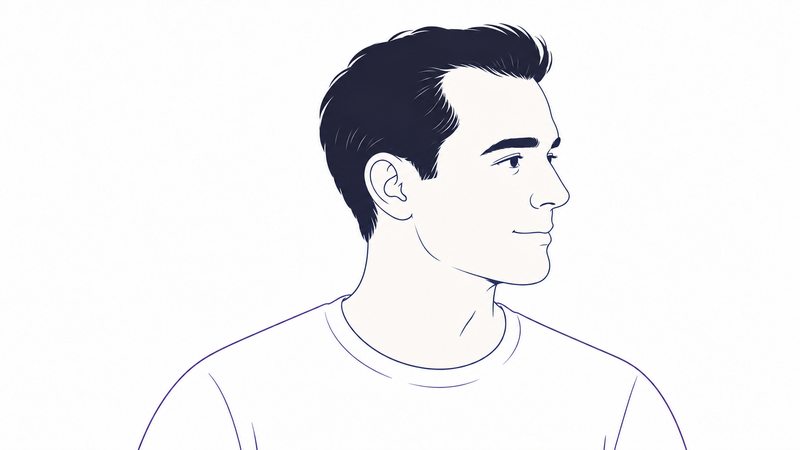
Norwood 2 Hair Loss is a mild, early stage of male pattern baldness that typically appears as a slight, symmetrical recession of the hairline at the temples, creating a slightly noticeable 'M' shape. It is sometimes described as a 'mature hairline.' Norwood 2 is usually subtle and does not include noticeable crown thinning.
Key Stages of the Norwood Scale
The Norwood scale is a classification system that categorises the stages of male pattern baldness on a scale of 1–7. The scale measures the progression of hair loss and can be defined by each stage:
- Class 1: A normal adult hairline with no visible hair loss.
- Class 2: At this stage, the hairline has begun to noticeably recede into a triangular 'widow's peak'. Hair loss is noticeable at this stage, but it is not yet considered balding.
- Class 3: The receding has become more noticeable, with the hairline now resembling an M, U or V shape.
- Class 4: Significantly noticeable hair loss, as a thin line of hair may visibly separate the crown.
- Class 5: Bald spots begin merging into one as hair loss on the crown and vertex becomes more significant.
- Class 6: Extreme hair loss may cause only a 'halo' of hair around the sides to remain. This hair may still be available as donor hair.
- Class 7: Complete to near complete baldness. There may be a thin band of hair at the base of the head.

Identifying Norwood 2
The early stages of Norwood 2 can be identified by a minor recession of the hairline around the temples and no obvious bald spot on the crown area. While examining your hairline, ask yourself the following questions:
- Are your temples noticeably more hollow than they were 5–6 years ago?
- Is your hairline higher, or moving backwards?
- Does your hairline show a slight M or V shape?
Once Norwood 2 has been identified, it is important to check if the hair is becoming thinner. This stage is typically just a natural progression of your hairline and may remain unchanged for years. Other causes of hair loss, such as DHT sensitivity, may be effectively managed at this stage, making it crucial to identify them early. Solutions and results vary between individuals.
What Causes Norwood 2 Hair Loss?
Norwood 2 is mainly caused by androgenetic alopecia, also known as male pattern baldness. Male pattern baldness is typically caused by a genetic sensitivity to DHT, a hormone derived from testosterone. This sensitivity causes hair follicles in the temples to shrink, resulting in an M or V-shaped hairline recession. This recession typically starts in the late 20s or early 30s.
As a genetic condition, family history may play a key role in the likelihood of Norwood 2 and male pattern baldness, as inherited genes may determine DHT sensitivity. While Norwood 2 may advance to the next stage without intervention, for many men, it is a natural progression and may simply settle into a maturing hairline.
Other Contributing Factors
Other factors that may contribute to male pattern baldness typically do not cause Norwood 2 alone, but may amplify a genetic predisposition. These factors include:
- Lifestyle factors: Follicle miniaturisation and increased shedding may be sped up by chronic stress and poor sleeping habits. Smoking and diet may also affect hair health. Low iron, zinc or vitamin D may exacerbate balding.
- Health conditions: Certain health conditions may affect hair health and accelerate natural balding. Insulin resistance and metabolic syndrome are both tied to early male pattern baldness, while oxidative stress or changes in the microbiome of the scalp may affect hair health.
How Common is Norwood 2 Hair Loss?
Norwood 2 Hair Loss is a completely natural progression of most men's hairline. According to one study, at least 58% of men may show some signs of a maturing hairline by age 35. Of those affected by male pattern baldness, 44% would remain at stage 1–3 for their lifetime.
Male pattern baldness is extremely common, and early management may greatly affect hair loss progression in the next stages of the Norwood scale.
How to Treat Norwood 2 Hair Loss
By identifying hair loss at the Norwood 2 stage, you have many options for effective treatment, as the damage is still mild and the scalp has hair left to preserve. Methods for treating Norwood 2 include:
Non-Surgical Treatments
Non-surgical treatments for Norwood 2 include:
- Hair optimisation: While changing your hairstyle will not prevent further hair loss, it can help you feel more comfortable and less exposed. Avoid tight hairstyles or harsh chemicals in shampoos, and style your hair forward to cover thinning temples. Side-wept hairstyles, buzz cuts and skin fades can also divert attention from your hairline.
- Medications: Prescription and non-prescription medications may be available. Consult your healthcare professional to determine what is appropriate for you.
Medical Therapies
Medical therapies for Norwood 2 include procedures and long-term treatments to improve hair health. These therapies include:
- Platelet-rich plasma therapy: This treatment involves processing your own blood and injecting it into the scalp to stimulate hair follicles, which may strengthen your hair against early-stage thinning. This is typically done through sessions every 4–6 weeks.
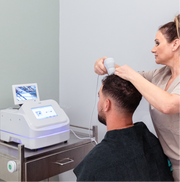
- Low-level laser therapy: In this treatment, devices like brushes and helmets use light energy to stimulate follicles, which may improve blood flow and help miniaturised hairs become thicker. This therapy may be safely performed at home, but the result may be slower and more subtle.
- Microneedling: Also known as derma rolling, this process uses tiny needles to penetrate the scalp, which may promote collagen growth and enhance the absorption of topical haircare treatments.
Lifestyle Changes
There are many environmental factors that may be contributing to increased hair loss. Some lifestyle changes that may help to treat Norwood 2 include:
- Stress management: Chronic stress may accelerate hair loss and push hair into shedding phases. Try to prioritise a healthy sleeping schedule, get regular exercise and consider other habits to reduce stress, including mindfulness, breathing work or meditation.
- Dietary changes: Hair needs key nutrients like protein, iron, zinc and vitamin D to remain healthy. Eat more whole foods like eggs, red meat, fish, leafy greens and nuts to ensure your hair remains enriched. You should also try to avoid extreme dieting and rapid weight loss.
- Health changes: Habits like smoking and chronic sun exposure may damage hair and reduce the blood flow to your hair follicles. Creating a regular scalp care routine may also greatly contribute to hair health and help to support a reduction in dandruff and inflammation.
Tracking and Monitoring Norwood 2 Treatment Progression
To track the progress of your male pattern baldness and determine if your treatment is effective, establish a baseline of your hairline. Then, take monthly photographs in consistent, bright lighting. Focus on a top-down view of your crown and front-facing shots of your temples to track the most crucial areas.
If you notice you are shedding significantly, or the recession seems to be moving over a few months instead of years, consider seeking professional advice. Treatment results for Norwood 2 may vary between individuals, and results are not always guaranteed.
Norwood 2 Treatment at Gro Clinics
When considering treatment for male pattern baldness, it's best to work with registered health practitioners. At Gro Clinics, consultations are available to discuss a range of hair loss management options. A qualified practitioner can help determine suitable approaches based on your individual needs.
Gro Clinics offers a range of hair loss management options across our clinics in Sydney, Melbourne, Brisbane, Gold Coast, Perth and Auckland. From scalp care products to hair transplants and non-surgical treatments, we may be able to help create a plan of suitable approaches that best support you on your hair regrowth journey.
Contact Gro Clinics to book a consultation with one of our advisors and discuss a treatment option that works for you.
Frequently Asked Questions
How long does it take to go from Norwood 2 to 3?
The exact time it takes for hair to regress from Norwood stage 2 to 3 varies heavily on the person, their genetics, their health and their lifestyle.
With early identification and treatment, you may help slow the progression of hair loss. Consult with a medical professional today to determine the state of your hair health.
Can Norwood stage 2 be reversed?
If Norwood stage 2 is treated early enough, it may support improvement in hair appearance. Norwood 2 may be responsive to prescription medical treatments and therapies, including certain topical or oral options and microneedling.
Results vary depending on the individual, and medicines mentioned are prescription-only.
Is Norwood 2 too early for transplants?
Depending on your hairline, Norwood 2 is generally considered too early for hair transplants, as it may simply be a maturing hairline and not a result of accelerated balding.
As your hair loss is not stabilised yet, you may need a second transplant as your natural hairline continues to recede. This may also waste crucial donor hair.
What are the big 3 for thinning hair?
The 'big three' for thinning hair typically refers to three commonly discussed, evidence-based treatment options that may help reduce the progression of pattern hair loss. These are generally understood to include a topical or oral medication to support circulation to the follicle, a prescription oral treatment to address hormonal factors, and a medicated shampoo to support scalp health.
Suitability varies between individuals. Some of these treatments are prescription-only and require assessment by a qualified healthcare professional to determine whether they are appropriate for you.
Is balding 100% genetic?
No, balding is not always caused by genetics, although it is a primary cause. In addition to genetics, hair loss may also be caused by age, hormonal changes and environmental factors such as stress, nutrition and illnesses.
Is Norwood Stage 2 just a mature hairline?
No, Norwood stage 2 is not just a mature hairline, although the conditions have a significant overlap.
A mature hairline is a change that naturally happens as men age, and many men can have a mature hairline without progressing to baldness. Norwood 2, while similar to a mature hairline, is a signal of potential male pattern baldness, and with identification, may be treated to stabilise naturally, which may help reduce the progression of hair loss.
What age is too late for a hair transplant?
There is no exact age that is 'too late' for a hair transplant. It can be safely performed even on patients in their 70s. It is 'too late' for a hair transplant if you do not have enough quality donor hair due to hair loss, such as loss at Norwood Stage 7. It may also be too late for a hair transplant if age has lowered your scalp's elasticity.
This information is general in nature and does not replace medical advice. Individual results vary. A consultation with a qualified healthcare professional is required to determine appropriate treatment options.