












Key Takeaways
=Testosterone often gets blamed for hair loss, but the real connection is more complex. Many people believe that higher testosterone levels directly cause baldness, when in reality, hair loss may be affected more by genetics and follicle sensitivity than hormone quantity. This article unpacks the clinical research behind testosterone, DHT, and hair thinning.
Testosterone doesn’t outright cause hair loss. In reality, hair loss may depend more on genetics and follicle sensitivity than hormone quantity. An inherited sensitivity of the androgen receptor to dihydrotestosterone (DHT) plays a major role in follicular miniaturisation and hair loss in both men and women (1).
What is DHT?
DHT is a hormonal by-product of testosterone. It’s produced by the enzyme 5-alpha-reductase and causes body and facial hair growth during puberty.
As you continue to age, DHT can attach to your hair follicles, binding the androgen receptor with approximately five times the affinity of testosterone (1), causing them to shrink. Known as follicle miniaturisation, this process may reduce the size and function of hair follicles over time, thinning hair and causing androgenetic alopecia.
How DHT Influences Hair Loss
Genetics determine how sensitive your hair follicles are to DHT, impacting the likelihood that you will experience hair loss. People with a family history of androgenetic alopecia, commonly known as female or male pattern baldness, may be more likely to experience hair thinning or recession.
Many studies have researched the connection between DHT and hair loss, including a study finding that 98.1% of bald male participants had a polymorphism of the androgen receptor gene. In comparison, these participants had unremarkable levels of testosterone (2).
Does DHT Affect Women?
DHT will affect any person who is able to grow hair. Although women produce less testosterone than men, DHT may similarly impact women’s hair follicles.
Acting in different areas of the scalp than male pattern hair loss, women may also present with areas of follicle miniaturisation due to DHT sensitivity. DHT has also been linked to increased hair growth in individuals with polycystic ovarian syndrome or polyendocrine metabolic ovarian syndrome (3).
Hair Loss Treatment Methods: What Clinical Trials Suggest
Here are some common treatments for hair loss, and what the research says about them.
Managing DHT Sensitivity
DHT may be directly targeted by DHT blockers. Designed to inhibit DHT production by slowing the conversion of testosterone, DHT blockers may help individuals with androgenetic alopecia see a reduction in hair loss. Other than prescription medications, there are natural foods and beverages that are believed to reduce the 5-alpha-reductase enzyme, including green tea and coconut oil (4).
For more information, see our full guide on DHT blockers.
Minoxidil
Minoxidil is a medication that has shown a correlation with hair development. Both topical and oral minoxidil are designed to stimulate hair growth by increasing blood flow, attempting to prolong the anagen (growth) phase of the hair cycle, possibly resulting in hair regrowth (5). For more information, check out our complete guide to minoxidil for hair loss.
Finasteride
Finasteride is a reductase inhibitor, linked to blocking the enzyme that converts testosterone into dihydrotestosterone (DHT). It has been found to suppress serum DHT by approximately 70% from baseline levels (6).
Minoxidil and finasteride may also be combined into a topical solution designed to combat hair loss and promote healthier, thicker hair growth.
Keep in mind that prescription haircare treatments are only available following a consultation to assess suitability and cannot be used in conjunction with all hair loss treatments. A consultation with a healthcare provider may help determine what combination (if any) is suitable for you.
How a Hair Transplant May Help
Hair follicles on the sides and back of the scalp are typically more resistant to DHT. These areas often retain hair even in advanced stages of hair loss.
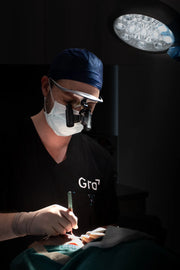
At Gro Clinics, our AHPRA-registered doctor-led team uses a technique called Precise Follicle Placement (PFP). This method uses Follicular Unit Extraction (FUE) to move healthy follicles from more resistant areas of the scalp to areas affected by thinning. The procedure is performed or overseen by qualified doctors and is designed to provide natural-looking results.
Get Support From a Gro Hair Growth Advisor
All consultations at Gro Clinics are carried out by trained hair growth advisors. During your consult, you’ll receive information about the factors influencing your hair loss and potential treatment options.
Gro Clinics are available across Australia and New Zealand:
Frequently Asked Questions
Can hair loss be reversed?
The effect of hair loss reversal is entirely dependent on the initial cause of the hair loss. For DHT-related hair loss or male pattern baldness, generally hair loss may be slowed, but not reversed.
Early-stage androgenetic alopecia may be targeted with DHT blockers, which may slow down the rate of follicle miniaturisation. Later-stage hair loss may not be reversed, but hair transplantation procedures may aid in visual changes to the scalp.
For more information, see our article on hair loss reversal.
Will my hair grow back if I stop testosterone?
If you have been receiving testosterone-related treatments such as testosterone replacement therapy, you may experience changes associated with hair loss. Stopping supplementary testosterone may limit future hair loss but will not mend any hair follicles that have been shrunk by DHT. Stopping treatment will not halt hair loss if you are genetically predisposed to balding.
Can I combine treatments?
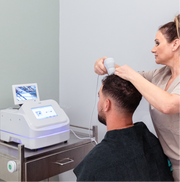
Some hair loss treatments may be combined for an increased chance of hair regrowth (7). Medications minoxidil and finasteride are commonly combined, and other topical treatments like follicle stimulation may be used in conjunction with medications to target hair loss.
Can hair treatment make you infertile?
Some cases of finasteride and DHT blocker use have resulted in reduced sperm counts. These effects may improve after discontinuation of the medication, though individual responses vary. Minoxidil is a local follicle treatment and has not been linked to altered hormone levels (8).
Previous research has shown that DHT levels are linked to sexual development and male fertility, not just changes in the hair growth cycle and body hair growth. While studies suggest hair loss treatments may lower fertility rates, there is no research to suggest the treatment will render individuals infertile (9).
Do I need a prescription for hair growth medication?
Yes, you will generally need a prescription for medications like oral minoxidil and finasteride. Topical minoxidil may be sold over the counter at pharmacies. Consult a doctor before beginning any hair loss treatment or medication.
Can We Predict Baldness?
While you can't 100% predict baldness, you may check for the genetic signifiers that may make balding more likely. Hair loss in men generally may be predicted by tracking baldness or bald spots in immediate family members.
In a large-scale study predicting hair loss by comparing autosomal genes and X chromosomes, participants with a notable DHT sensitivity were found to exhibit higher rates of hair loss (10).
When predicting baldness, the most accurate results are found through clinical testing.
References
- Androgenetic Alopecia and Risks of Overall and Aggressive Prostate Cancer: An Updated Systematic Review and Meta-Analysis, PubMed Central, 2025
- Genetic Basis of Male Pattern Baldness, The Journal of Investigative Dermatology, 2003
- The Safety of Testosterone Therapy in Women, University of Toronto, 2012
- Herbal Remedies for Hair Loss: A Review of Efficacy and Safety, Karger, 2025
- Efficacy and safety of oral minoxidil in the treatment of alopecia, Frontiers in Pharmacology, 2025.
- Finasteride, StatPearls Publishing, 2024
- Comparing minoxidil-finasteride mixed solution with minoxidil solution alone for male androgenetic alopecia: a systematic review and meta-analysis of randomized controlled trials, PubMed, 2025
- Differences in reproductive toxicology between alopecia drugs: an analysis on adverse events among female and male cases, PubMed, 2016
- 5α-reductase-2 Deficiency’s Effect on Human Fertility, PubMed, 2014
- Genetic prediction of male pattern baldness, PLOS Genetics, 2017