Key Takeaways
If you've noticed more hair falling out in the shower or when you brush it, your first thoughts are likely about what's causing it and whether it's reversible. Gro Clinics has spent over a decade helping Australians and New Zealanders work through exactly these questions.
Hair loss is very common, and around half of adults experience some form of it by age 50 (2024 Status of research on the development and regeneration of hair follicles). Many forms of temporary hair loss may be reversed, depending on the cause and underlying factors. However, some forms of genetic hair loss may not return to normal.
We'll cover the chances of reversibility by hair loss type, the most common causes, and possible treatments.
Please note that this information is general in nature and does not constitute medical advice.
Reversibility by Hair Loss Type — Quick Reference Table
Hair loss may be caused by many underlying factors, and treatment may help restore a healthy hair growth cycle. Some types of hair loss may be treated with lifestyle changes, but others may require additional treatment to support regeneration.
Disclaimer: This table is general in nature, and results discussed are relevant to the clinical research only and do not necessarily reflect results other individuals may experience.
| Type of Hair Loss | Reversibility Outlook | What This Means | Best Approach | Key Evidence |
|---|---|---|---|---|
| Androgenetic alopecia (male/female pattern hair loss) | Often manageable, but may not return to normal. | Medical treatment may slow progression and support partial regrowth, but the underlying genetic process continues without ongoing treatment. | Medical treatment performed by AHPRA-registered doctors, such as in-clinic procedures like PRF or LLLT. Hair transplant for more advanced stages. | PRP Meta-Analysis, 2022 |
| Telogen effluvium (stress, illness, post-partum, crash dieting) | Generally recoverable. | Hair typically returns to normal density after a period of time, once the trigger is addressed. Individual results vary. | Identify and remove the underlying trigger. Prescription haircare and scalp support may aid recovery. | DermNet NZ — Telogen effluvium • BetterHealth Vic — Patterned hair loss |
| Alopecia areata (autoimmune patchy loss) | May not be permanently reversible. Individual experiences do vary. | Some cases may self-resolve; others may respond to medical treatment. A small percentage may progress to more extensive forms. | Gaining a doctor's diagnosis will help determine the stage and which treatments may be suitable. | Cleveland Clinic 2023 |
| Traction alopecia (tight hairstyles, extensions, frequent tension) | Often recoverable if caught early | Change habits early to support healthy hair regrowth. Once scarring sets in, follicles may not regrow naturally. | Change the hair habits causing the tension as early as possible. If scarring has occurred, hair transplant may be considered. | DermNet NZ — Traction alopecia • AAD — Hairstyles that pull can lead to hair loss |
| Nutritional deficiency hair loss (iron, zinc, vitamin D, protein) | Generally recoverable, but individual results vary. | Once the deficiency is corrected, hair growth may typically return to normal. Individual experiences vary. | Blood test through a GP. Address the specific deficiency under medical supervision. | Guo & Katta — Diet and Hair Loss, 2017 |
| Medication-induced hair loss | May be recoverable depending on individual factors. | Hair typically returns once the medication is changed, adjusted, or stopped — but never change a prescribed medication without your doctor's input. | Speak with the prescribing doctor. Do not stop a medication independently. | DermNet NZ — Drug-induced alopecia |
| Scarring alopecia (lichen planopilaris, frontal fibrosing alopecia, CCCA) | Not reversible. | Once the follicle is replaced by scar tissue, hair cannot grow back in the affected area. | Slow further loss and support regeneration. Hair transplant or scalp micropigmentation may be considered for the look of density once the condition is stable. | FUE in Scarred Scalp Study, 2019 |
What Causes Hair Loss in the First Place?
The cause determines the answer to "Is hair loss reversible?", so understanding the trigger is the first step.
Many factors may temporarily disrupt the natural hair growth cycle. For a healthy adult scalp, hair grows in a three-stage cycle:
- Anagen growth phase: around 85-90% of hair follicles are in this stage at any one time, and it lasts around 2-6 years.
- Catagen transition phase: around 1-2% of hair follicles shrink in the transition phase, which lasts around 1-2 weeks.
- Telogen resting/shedding phase: around 8-15% of follicles become inactive and eventually shed when a new hair pushes through.
The cycle needs a balance of hormones, vitamins and minerals for each phase to maintain healthy hair growth. So if you notice excessive hair loss or thinning, it may be an indicator that an underlying cause is throwing off the natural cycle.
Genetic (Pattern) Hair Loss
Hereditary hair loss is one of the most common forms of hair loss. Around 30-50% of men will likely experience male pattern baldness (male androgenetic alopecia study updated in 2023), and around 49% of women will experience some form of female pattern baldness in their lives.
Although driven by genetics and the DHT hormone, the shrinking hair follicles may show pattern baldness differently for men and women. For men, it may appear as a receding hairline or crown thinning, whereas women may start to see thinning hair across the top of the scalp.
It's unlikely that this type of hair loss may be reversed once the hair follicles have started to shrink. However, early treatment may help to slow down the effects and regenerate healthy cells.
Telogen Effluvium (Stress, Illness, Post-Partum)
Telogen Effluvium is generally considered a temporary form of hair loss, triggered by a physical or emotional shock, such as:
- Illnesses
- Postpartum hair loss following childbirth
- Emotional stress
- Injuries
These sudden changes may disrupt the hair growth cycle and prematurely push follicles into the Telogen (shedding) phase. Individuals may see thinning hair or more hair than usual left on their hairbrush as more follicles become inactive and fall out in this phase.
This type of hair loss may improve, depending on all underlying factors and treatment. Once the trigger has passed and hormones return to their balanced state, the follicles may return to a normal cycle. Some people may see thicker hair once follicles re-enter the anagen growth stage.
Alopecia Areata
Alopecia areata is an autoimmune disorder that causes the body to mistakenly attack hair follicles, which may lead to bald patches. It can affect both men and women at any age and is currently prevalent in roughly 1.2-2.3% of Australians (Australasian Journal of Dermatology).
It may present in three types:
- Patchy Alopecia Areata: Small patches on the scalp and/or body.
- Alopecia Totalis: Full bald scalp.
- Alopecia Universalis: Hair loss across the full body, including eyebrows, eyelashes, and nose hair.
The autoimmune disorder is not contagious but may affect those with a family history of alopecia areata.
Patchy alopecia areata may respond more to treatment to slow further hair loss, but both alopecia totalis and alopecia universalis may be more severe, and regeneration is unpredictable. The course of the disease is highly variable and may recur depending on individual experiences.
Lifestyle Triggers
Different lifestyle factors may disrupt a healthy hair growth cycle in different ways and may lead to hair loss or thinning, including:
- Lack of sleep
- Smoking or vaping
- A poor diet
- Vitamin deficiencies
- Tight hairstyles
- Harsh chemical treatments
Hair loss from lifestyle factors is typically temporary and may be improved if addressed early. Although sustained lifestyle triggers may affect individuals differently and impact hair regrowth.
Medications and Medical Conditions
Some medical conditions and certain medications may impact hormonal changes and disrupt the hair growth cycle, including:
- Thyroid disorders
- Polycystic ovary syndrome (PCOS), also referred to as polyendocrine metabolic ovarian syndrome (PMOS)
- Lupus
- Some antidepressants, beta blockers, blood thinners and chemotherapy.
Medical conditions must always be diagnosed by a doctor, and any changes to prescribed medications must be approved first.
In some cases, hair loss may be slowed if the underlying issue is managed or treated. However, not all individuals experience these conditions in the same way, and results may vary.
What Treatments May Help With Hair Loss?
There's no single treatment that works for every cause. The first step is a consultation with your doctor to determine the underlying factors triggering hair loss or thinning.
The good news is that there are many different types of treatments that may support hair regeneration for certain individuals. For more enduring forms of hair loss, hair transplant procedure designed for long-lasting results may be suitable. We've listed the range of hair treatments available, ordered from least to most invasive.
Individual results may vary. A consultation is required to determine suitability.
Prescription Hair Loss Medications
Topical prescription hair loss medication may help manage hair thinning and promote hair growth for men experiencing earlier stages of hair loss. It may not be suitable for individuals with scarring alopecia, as the follicles are unlikely to grow when scar tissue exists.
Hair restoration from prescription hair loss medication is a gradual process, with results varying over time. Medications are only available following a consultation with a doctor to assess suitability, and side effects are possible.
Non-Surgical In-Clinic Treatments
Some non-surgical treatments are designed for natural-looking results and gradual improvement over time. They may be suitable for individuals experiencing more temporary hair loss, or those in the early stages of genetic pattern baldness, though a consultation is required to determine suitability.
Gro Clinics has non-surgical hair restoration options that are designed to be long-lasting and are performed by registered practitioners.
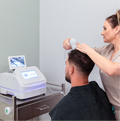
- Growth Factor Therapy: Key growth factors are applied to the scalp that may help to improve scalp condition and maintain hair follicle function.
- Platelet-Rich Fibrin (PRF): Involves using components of your own blood as part of a treatment plan that may stimulate hair growth and support skin health on the scalp.
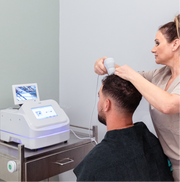
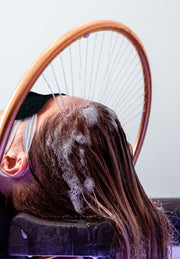
- Low-Level Light Therapy: Uses red light technology that may be included as part of a broader hair management plan, depending on individual circumstances.
Individual experiences and results may vary. A consultation is required to determine suitability.
Hair Transplant Procedure
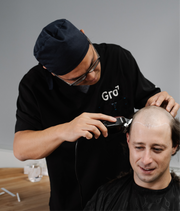
A hair transplant is a procedure that moves healthy follicles from a "donor" area to the thinning or balding area. It is designed for long-lasting, natural results and may suit those experiencing more enduring hair loss, such as androgenetic alopecia or scarring alopecia. It's important to note that a hair transplant may not stop ongoing pattern hair loss, so addressing the underlying cause at the same time is recommended.
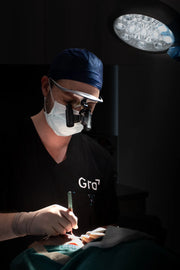
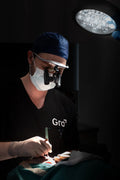
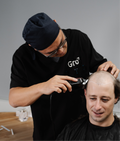
At Gro Clinics, our hair transplant doctors are AHPRA-registered, and undergo Gro Academy training to deliver our methodology. We use a PFP methodology (Precise Follicle Placement), which is a refined way of performing Follicular Unit Extraction (FUE) hair transplant procedures. The process involves individually extracting follicles and using an implantation device to place each graft with controlled angle, depth, and direction. This careful technique helps support natural-looking density and alignment with your existing hair pattern.
Disclaimer: All medical procedures carry risks. Individual results vary. A consultation with a qualified health practitioner is required to assess suitability. PFP is Gro's internal method under the broader FUE category and may not lead to different clinical outcomes. Results vary from person to person.
Lifestyle and Self-Care Steps
If you're just beginning to notice signs of hair shedding or thinning, some lifestyle changes could help restore a healthy hair cycle:
- Check the recommended daily intake of vitamins and include plenty of vegetables, proteins, and fibre and eat a balanced diet.
- Get adequate sleep each night. Your body needs rest to repair and produce new cells.
- Incorporate exercise into your routine to boost your metabolism.
- Avoid excessive heat styling.
- Stop smoking or vaping.
- Gently massage your scalp daily to help remove buildup from hair follicles.
- Change to a hydrating hair care routine with shampoo and conditioner formulated to soothe and revive damaged hair.
Lifestyle changes may support hair health, but won't reverse the effects of genetic hair loss or underlying medical conditions on their own.
What CAN'T Be Reversed?
Not every hair loss may be reversed. Knowing the underlying cause and limits is just as important as knowing the options available.
Individual experiences vary, but typically, the following hair loss types may not be reversible:
- Scarring Alopecia: When follicles are replaced by scar tissue, it may not be possible to regenerate the cells. Treatment options may help to slow further hair loss and support the remaining follicles.
- Long-dormant follicles: Advanced balding, typically Norwood stage 6-7, may not return to normal. Once a follicle has been inactive for many years, the cells responsible for hair growth may not regenerate.
A consultation is required to assess the severity and treatment suitability. Option 1 may be a non-surgical procedure called scalp microneedling, which uses tiny, controlled micro-injuries to stimulate your body's natural healing process and may support follicle activity. Option 2 may be a hair transplant, which may help to restore growth in the bald patches by relocating healthy follicles from a donor area.
When Should You See a Doctor?
If you notice thinning hair or loss, the most important thing to remember is not to self-diagnose. If there is an underlying cause, it may need to be treated to help slow its progression. See your doctor if you experience:
- Hair coming out in clumps or sudden, dramatic shedding.
- The appearance of patchy bald spots.
- Any scalp pain, burning, itching, or visible redness.
- Hair loss after starting a new medication.
- Hair loss alongside other symptoms, such as fatigue, weight changes or period changes, may point to a thyroid or hormonal issue.
Hair Loss Reversal FAQs
Does hair loss reverse on its own?
In short, yes. Some hair loss types may slow down or reverse in due course. In particular, telogen effluvium (stress, illness or post-partum) may return to a normal hair growth cycle once the trigger has passed. Genetic or scarring hair loss may not be reversed without treatment.
Does stopping smoking improve hair loss?
For some individuals, hair loss may be reversed once smoking has stopped and the scalp blood flow returns to normal. However, some excessive smokers, or those with other underlying causes, may not see all hair loss reversed if there was oxidative damage to the follicles.
Does PCOS-related hair loss improve with treatment?
When the hormonal imbalance is medically managed, some individuals may see hair regrowth. It may not be possible to restore hair to its original state, but a full treatment plan alongside medication may support hair density and coverage.
Will a lost hair grow back?
During a healthy hair growth cycle, a hair grows, transitions and then sheds to make room for the next hair cell. If the follicle itself has been damaged, scarred or miniaturised, over time the cycle may disrupt and not regrow.
Ask a Hair Loss Advisor With a Free 15-Minute Discovery Call
Gain a free 15-minute discovery call with a hair growth advisor to determine if Gro Clinics may support. If eligible, you may book an in-clinic assessment and personalised treatment plan.
Our clinics are located across Australia and New Zealand, including Sydney, Brisbane, Melbourne and Auckland.