









Key Takeaways
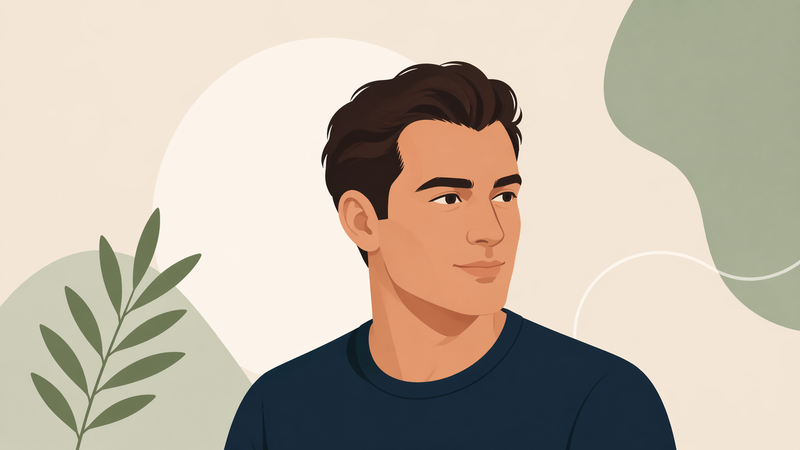
If you're wondering what a widow's peak hairline looks like and whether it's a sign of hair loss, you're not alone. The term "Widow's peak" is searched on Google around 85,000 times a year globally.
The hairline is hereditary and more common than you think in both males and females. Many prominent celebrities, like Leonardo DiCaprio and Marilyn Monroe, have a widow's peak. The distinctive hairline has been used in TV and Films to create iconic characters like Dracula and The Joker, which has led to the widow's peak hairline becoming synonymous with villainous characteristics.
Why is it called a widow's peak?
The name "a widow's peak" originates from 18th-century folklore in England and France. Widowed women would wear a black widow's hood or veil that pointed down in the middle of their foreheads when in mourning. The hairline that resembled a widow's hood became known as a bad omen, signalling early widowhood.
What Causes a Widow's Peak? Is It Inherited?
In short, yes, a widow's peak is purely genetic, and in the majority of cases, it's a natural variant. So, if someone in your lineage has a widow's peak, chances are you will also develop one.
However, studies show that there are cases where it's associated with genetic conditions, including:
- Aarskog syndrome: A rare genetic disorder that mostly affects males. Its common characteristics include a widow's peak, short stature, facial and limb abnormalities and cognitive disorders.
- Donnai-Barrow syndrome: A mutation in the LRP2 gene that can cause abnormalities of the eyes, ears, nose and hairline, with some cases leading to vision and hearing loss.
- Frontonasal dysplasia: A very rare condition that mainly affects the face and hairline. A widow's peak is a common genetic trait, as well as unusual mutation in the skull, mouth or nose.
- Opitz G/BBB syndrome: A unique condition that only affects the midline of the body. Common cases include abnormalities with eyes, voice boxes, ears and mouth.
Most common widow's peaks are inherited, but you can also develop a widow's peak later in life when the hairline starts to recede.
Female Widow's Peak
A 2013 study by the International Society of Hair Restoration Surgery (ISHRS) of 360 women found that 83% of women have a widow's peak by the age of 40. Although many other studies show the figure ranges between countries, the genetic trait varies widely across ethnic populations.
It's easier to tell if a woman has a widow's peak once the hair matures, as receding hairlines are less common in females.
Male Widow's Peak
Studies on the prevalence of male widow's peaks show the trait ranges from 24% to 49%, depending on the study size, age group and ethnic population.
It can be harder to tell if a man has a widow's peak hairline, as their hairline commonly recedes over time. If the distinct V-shape was present after childhood, it's most likely a true widow's peak.
Can a widow's peak become a receding hairline?
A widow's peak can appear with a receding hairline, resulting in a more obvious V-shaped hairline. However, in general, a natural widow's peak is usually stable, whereas a receding hairline tends to move back over time.
If you're trying to tell if you have a widow's peak or a receding hairline, it's best to check whether the peak was present after childhood or has recently appeared along with hair thinning.
Common Myths About Widow's Peak Hairlines
The name "widow's peak" dates back to 18th-century folklore and bad omens, so, unsurprisingly, there are still many myths about the hairline, including:
- They are rare or unusual. It's actually a fairly common genetic trait.
- Only males can get it. In fact, it's very common for females to inherit the hairline.
- It's a sign of bad luck. This relates to 18th-century folklore, when it was believed a widow's peak signalled early widowhood.
- It makes you look like a "villain". This idea comes from common fictional characters, such as Dracula and The Joker, not science.
- They mean balding. A widow's peak is different to a receding hairline, though it can be confused in males, as the hairline commonly changes with age.
How Can I Fix a Prominent Widow's Peak Hairline?
Although it's a common hairline, there are instances when people prefer not to have a prominent V-shaped hairline.
If a widow's peak has also emerged through hair loss or thinning, there are many treatments available that may be included as part of a broader hair management plan.
Non-Surgical Treatments
- Prescription Haircare: This treatment option may be available following a consultation with a qualified medical practitioner to assess suitability.
- Platelet-Rich Fibrin (PRF): Involves using components of your own blood as part of a treatment plan that may stimulate hair growth and support skin health on the scalp.
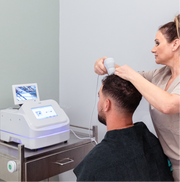
- Low-Level Light Therapy: Uses red light technology that may be included as part of a broader hair management plan, depending on individual circumstances.
All treatments are subject to individual assessment. Results vary between individuals. A consultation with a qualified medical practitioner is required to determine suitability.
Hair Transplant
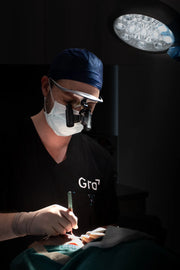
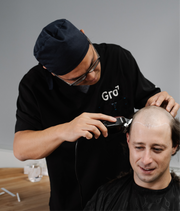
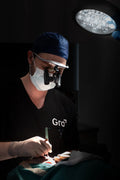
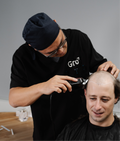
If you prefer not to have a widow's peak or you are seeing the signs of a receding hairline, a hair transplant procedure may help improve the appearance of hair coverage for suitable candidates.
At Gro Clinics, we have an inhouse FUE-based technique that focuses on follicle placement, which follows a natural hair pattern. Our free initial call is a chance to discuss your hair concerns and find out whether a consultation with one of our practitioners may be appropriate for you.
It's a medically informed approach that may support hair restoration.
Discuss Your Widow's Peak Hair Concerns with a Professional
Whilst a widow's peak is a common hairline and not a hair loss concern, it's understandably a personal choice whether the hairline works for you. If your widow's peak is moving back over time, this could be an indication of a receding hairline or other hair loss concerns.
A free initial consultation will be able to assess your widow's peak and hair growth goals to create a tailored plan of suitable treatments.
Gain support from a Gro Clinics qualified hair loss practitioner online or across many locations in Australia.
Frequently Asked Questions
What does a widow's peak signify?
A widow's peak usually signifies a normal, inherited hairline. In rare cases, it can signify a genetic disorder, but usually other abnormalities are present as well.
Is widow's peak dominant or recessive?
A widow's peak has not been clearly shown to be a recessive or dominant gene. Instead, research shows it is more likely influenced by multiple genes.
Is a widow's peak rare?
No, a widow's peak is a common genetic trait of the hairline.
Which hairstyles suit a widow's peak?
If you want to show off your widow's peak, then a slicked-back hairstyle can enhance the hairline. If you want to soften it, then various hairstyles, such as a side part, bangs, quiff or buzz cut, can balance the V-shaped point.
Can a hair transplant help with a widow's peak?
Results will always vary between individuals, and whether any underlying factors contribute to further hair loss or thinning. A hair transplant may help to aid new growth around the V-shape to encourage a straighter hairline.
When should I see an advisor?
You should see a hair loss advisor if your hairline changes over time, as it may be an early receding hairline, not a natural widow's peak. Additionally, if you have an itchy scalp, excessive shedding or patchy loss, a medical practitioner will be able to assess your hair health.