












Key Takeaways
Scalp visibility through your hair is normal to an extent. If you do have concerns, however, there are several methods available that may help reduce scalp visibility through hair and promote hair growth.
In this article, we will examine how to tell if your hair is thinning, the causes of hair thinning, and ways you may be able to reduce hair thinning and promote hair regrowth.
Is it Normal to See Your Scalp Through Your Hair?
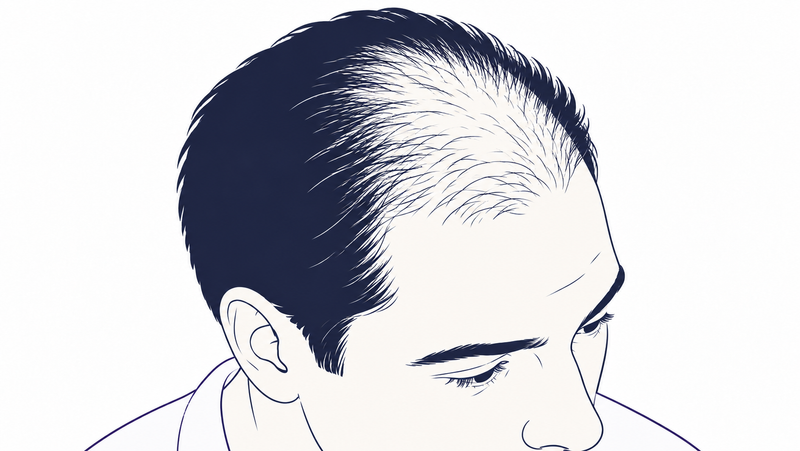
Seeing your scalp through your hair may be normal, especially if you're under bright lights. However, if you notice thinning hair in places where you previously had thick coverage, or sudden changes to your scalp visibility, then you may be experiencing a pronounced hair loss issue.
How to Tell if Your Hair is Thinning or You Have Low Density
60 Second Comb Test
Before shampooing your hair, lay a towel with a contrasting colour to your hair onto a flat surface. Then, comb your hair forward from the top of your scalp towards your towel for 60 seconds.
Repeat this process before three hair shampooings, using the same brush each time. After each brushing, count the number of hairs in your brush and on your towel. A mean hair count of ten hairs is typical, but anything significantly higher can indicate chronic hair thinning.
Visible Scalp Test
One of the simplest tests, the visible scalp test is exactly as it sounds. Observe your hair under natural lighting; if you can see your scalp, then you may have low hair density.
Should you have noticeable thinning but a lack of shedding, you may have fine hair. Meanwhile, if your hair looks thin at the roots, you may have low density without necessarily having hair loss.
Ponytail Measurement
Pull your hair together into a ponytail, and then measure its circumference. If your hair has a circumference of 4 or more inches, then you have higher hair density. Should the circumference be 2 or less inches, you may have low hair density and be vulnerable to thinning.
Photo Comparison
By comparing photos, you may be able to determine increased hair thinning over time. While reviewing random photos can give some indication, the most fine-tuned results are from photos under controlled conditions. Take photos showing your hair from the same angle and under the same lighting, and compare these over a number of months.
Common Causes of Hair Thinning
A normal hair growth cycle involves a growing, transition, and resting phase. However, this cycle may be disrupted by multiple factors, which can see the growing phase shortened and the resting phase prolonged. Here are some of the most common hair growth disruptions, which may result in hair thinning.
Hormonal Imbalances
Multiple hormone imbalances, including increased dihydrotestosterone (DHT), thyroid imbalances, pregnancy, and menopause, can each cause some degree of hair thinning.
Aging
As you age, your hair growth naturally slows down. As a result, the hair that does grow is often weaker and thinner than previously. The aging process and resulting hair loss may vary among individuals, however, and you may still wish to speak with a professional if hair loss accelerates suddenly.
Vitamin Deficiencies
If you have a low intake of iron, biotin, vitamin D, or protein, then you may experience increased hair thinning. A deficiency in these vitamins may also impair your natural hair regrowth.
Smoking
A 2021 study concluded that there may be links between smoking and alopecia, as well as hair greying. Chemicals found in cigarettes can damage hair follicles and block circulation. At Gro Clinics, we are familiar with the potential impacts of smoking on your hair.
Androgenic Alopecia
Often referred to as male pattern baldness, androgenetic alopecia is a form of hereditary hair loss which is often signified by hair shedding and general hair thinning. It's one of the most common forms of hair loss, and usually begins as a receding hairline and thinning crown in men, and a widening part in women.
Telogen Effluvium (Stress)
If you experience temporary stress and/or illness, your hair growth may go into its resting phase, and in turn may cause hair shedding and thinning. A 2018 study found that telogen effluvium may cause lower levels of vitamin A, which may result in higher instances of hair breakage. Additionally, lower iron, zinc and vitamin D levels are often associated with telogen effluvium.
Stress-related hair loss may be reversible, though it can vary among individuals.
Other Potential Causes
- Postpartum Imbalances: Thyroid disorders, nutrient deficiencies, stress and other factors post-pregnancy may cause some degree of hair thinning and loss.
- Ozempic®: While not listed as an official side-effect, the telogen effluvium, nutritional deficiencies, and hormonal shifts associated with Ozempic use may contribute to temporary hair loss.
- Hair Styles: Hair styles that pull on your roots, such as braids, top knots, and high ponytails, may cause hair breakage and subsequent hair loss over prolonged periods. Excessive use of curling irons and hair products with harsh chemicals may also accelerate hair thinning.
- Medications: Chemotherapy drugs and other medications may be linked to hair thinning, though hair loss may be temporary and stop when drugs are no longer taken.
- Lifestyle: Poor diet may lead to nutrient deficiencies, which in turn may lead to hair thinning.
A Range of Solutions for Hair Thinning
Whether you have mild or pronounced hair thinning, there are a variety of methods, practices, and treatments available to help support hair growth. While some can be administered at home, there are also clinically-backed methods available.
Easy Steps To Try At Home
- Diet Changes: With a few tweaks to your diet, you may be able to prevent hair thinning. A diet rich in nutrients such as biotin, vitamins A through D, protein, and zinc may help stabilise hair follicles and encourage their growth.
- Change Hair Colour: By changing your hair colour to one that matches your skin tone, you may be able to hide thinning hair. Matching colours may make it more challenging for people to notice where your hair stops and your scalp begins.
- Volumising Shampoo and Conditioner: Adding volume to your hair may help to increase coverage and obscure exposed scalp. Products such as our shampoo, conditioner, and hair repair mask may help repair damaged hair while also making it feel better to the touch.
- Silk Pillowcases: Rough bedding materials may pull on hair and cause breakage. Opting for softer materials, such as silk pillowcases, may reduce friction and prevent breakage.
- Massage Your Scalp: According to a 2016 study, a daily scalp massage may help promote blood flow, which in turn may lead to increased hair thickness. These scalp massages can be standalone, or be part of the normal shampoo applying process.
Non-Surgical Treatments
- Hair Growth Supplements: Specially formulated hair growth supplements may help to support thicker hair, thanks to ingredients such as biotin, horsetail extract, zinc and others.
- Prescription Haircare: This treatment option may be considered where appropriate and is only available following consultation with a qualified medical practitioner.
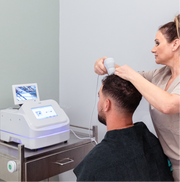
- Fotona HAIRestart Laser Technology: This laser technology delivers thermal energy to your scalp, which may improve hair density with multiple sessions.
- Growth Factor Therapy: A topical application of growth factors, proteins, and peptides is applied to your scalp. This hair loss treatment may support follicular function in areas of your scalp that are thinning.
- Platelet-Rich Fibrin (PRF): PRF treatments involve processing a small sample of your blood to concentrate growth factors and platelets. This is then applied to your scalp, and can be used on mild to moderately thin hair.
- Low-Level Light Therapy: For cases of mild to moderate hair thinning, Low-Level Light Therapy may produce positive results. Red light is applied to your scalp, with the aim of stimulating circulation and maintaining your scalp condition.
These treatments may be considered as part of an individualised plan. All medical and cosmetic treatments carry potential risks and may not be suitable for everyone. Outcomes vary between individuals, and suitability should be assessed by a qualified practitioner.
Hair Transplant
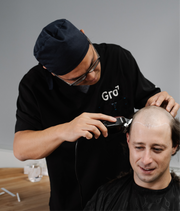
At Gro Clinics, our expert-led hair transplants involve relocating healthy hair follicles from one part of your scalp to another with less hair coverage. Hair transplants may result in longer-lasting hair growth and greater hair coverage on thinning areas, though individual results may vary.
Consult With A Local Hair Loss Advisor For A Tailored Plan
If you're concerned about your scalp visibility through thinning hair, Gro Clinics may be able to help. Our free initial call is a chance to discuss your hair concerns and find out whether a consultation with one of our practitioners may be a suitable next step. We have clinics in Sydney, Melbourne, Brisbane, Gold Coast, Perth and Auckland, with Zoom consultations also available.
Get in touch to discuss your concerns and explore suitable options following a consultation.
Frequently Asked Questions
Is seeing scalp through hair always thinning?
Seeing your scalp through hair isn't always indicative of hair thinning. Your scalp can be naturally visible at part lines, and can also be more visible when you have wet hair or naturally low hair density.
How much shedding is normal?
On average, it is estimated that people shed between 50–150 hairs each day naturally.
What's the difference between thinning and breakage?
Hair thinning involves gradually reduced hair density and hair falling out at its roots, which may expose the scalp. Hair breakage, on the other hand, involves the hair strands themselves snapping and may be sudden.
Does stress make my scalp more visible?
Yes, it can for certain individuals. Stress-related hair loss, known as telogen effluvium, may lead to greater exposure of your scalp.
Can thin hair become thick again?
Thin hair may appear thicker again, depending on the cause of thinness. Stress, nutritional deficiencies, and medications may all be reversed, and result in thicker-looking hair. Results may vary, however, and may take several months to become apparent.
When should I see an advisor?
If you start to notice rapidly accelerating hair thinning and large amounts of shedding, it may be time to speak with a hair loss advisor.
This information is general in nature and does not constitute medical advice. Individual results vary. A consultation with a qualified practitioner is required to determine appropriate treatment options.